Short answer Good feedback says what’s working, what isn’t, why, and which direction to explore next. Organise it as Keep / Change / Explore and your designer can fix the right things in one round instead of guessing for five.
The feedback problem
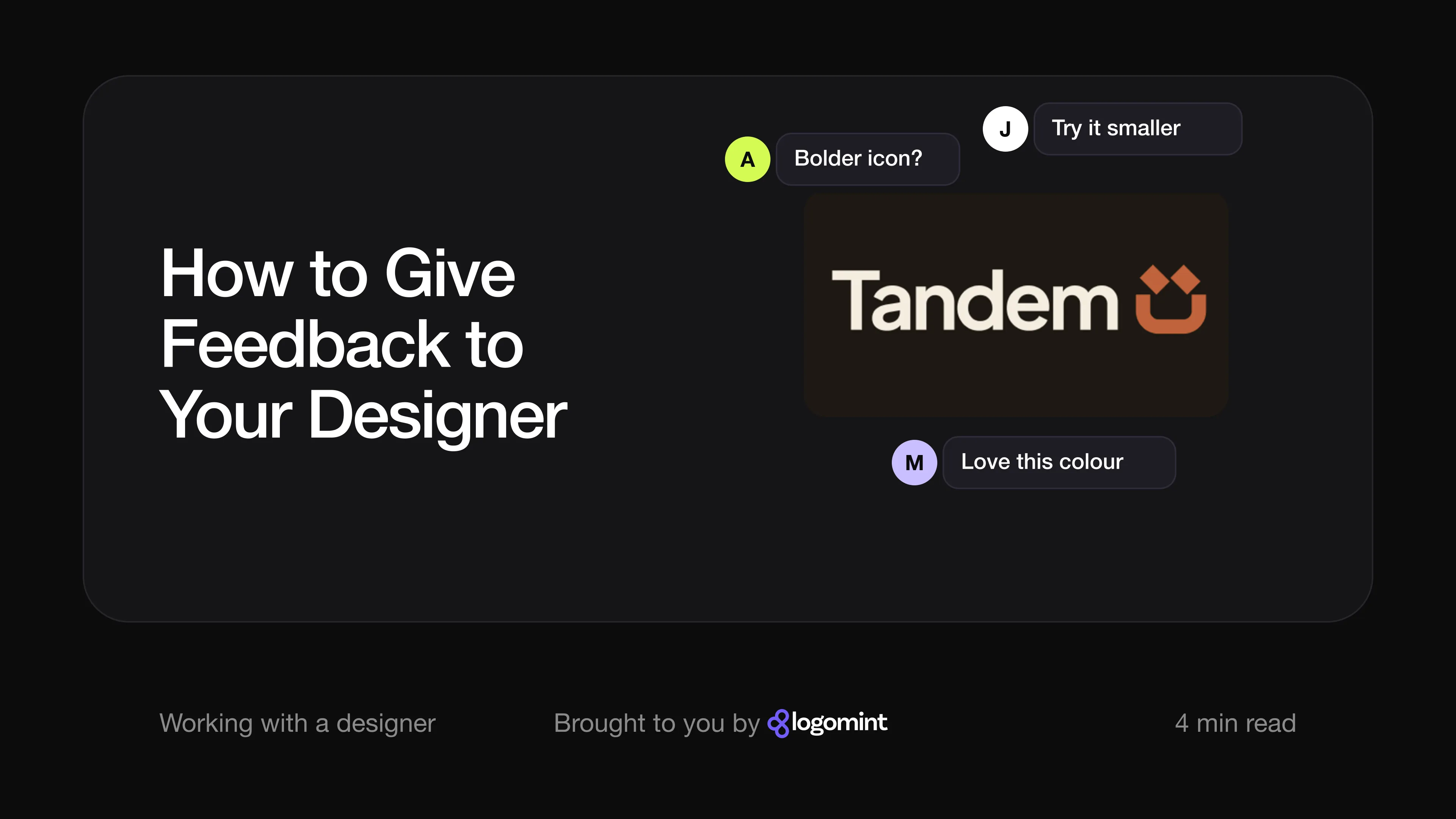
Every designer has received it, and most clients have sent it: “I don’t know… it’s not what I had in mind. Can you try something different?”
That message uses up a revision and gives the designer almost nothing to work with. They’ll try “something different”, but without knowing what was wrong they’re guessing, and the next version may be even further from what you want.
Giving good feedback is a skill, and it’s the biggest factor in whether your logo is finished after one round or five.
The four-question formula
Every piece of feedback should answer four questions:
- What’s working? Say what you like, not just what you don’t. If you love the icon but not the font, say so, or the designer may change the icon too.
- What isn’t working? Be specific. “I don’t like it” isn’t feedback. “The font feels too playful for a financial brand” is.
- Why? Explain the reason behind your reaction. “The icon feels generic” is good. “The icon feels generic because it looks like three competitors I see every day” is better.
- Which direction should they explore? Share examples: logos you admire, competitors’ logos, and what you do or don’t like about them. Visual references remove ambiguity that words can’t.
Common feedback mistakes
“Make the logo bigger”
The most famous client request in design, and almost always a symptom of something else. Ask yourself why it feels too small. Does it lack visual weight? Is something else competing for attention? A good designer fixes the cause instead of just scaling it up.
“Can you make it pop?”
“Pop” means something different to everyone. Try instead: “The logo feels flat, could we try bolder colours?” or “It gets lost on the background, can we increase the contrast?”
“My partner doesn’t like it”
Design by committee is how good logos become average ones. Everyone has an opinion on logos, and most are personal taste, not strategy, which is why design teams treat personal opinions as unactionable feedback. Your designer is working from your brand, your audience and your market.
If you want outside opinions, ask specific questions: “Does this feel trustworthy?” or “Would you buy from this company?” Those answers are useful. “Do you like it?” isn’t.
Describing the finished design
“A lion holding a shield with a crown on top, and our name in an elegant script.” That isn’t a brief, it’s a finished design described in words, and it leaves the designer no room to do their job.
Describe the feeling instead: “We want to feel established, trustworthy and authoritative, like a company that’s been around for decades.” Let the designer find the visual answer.
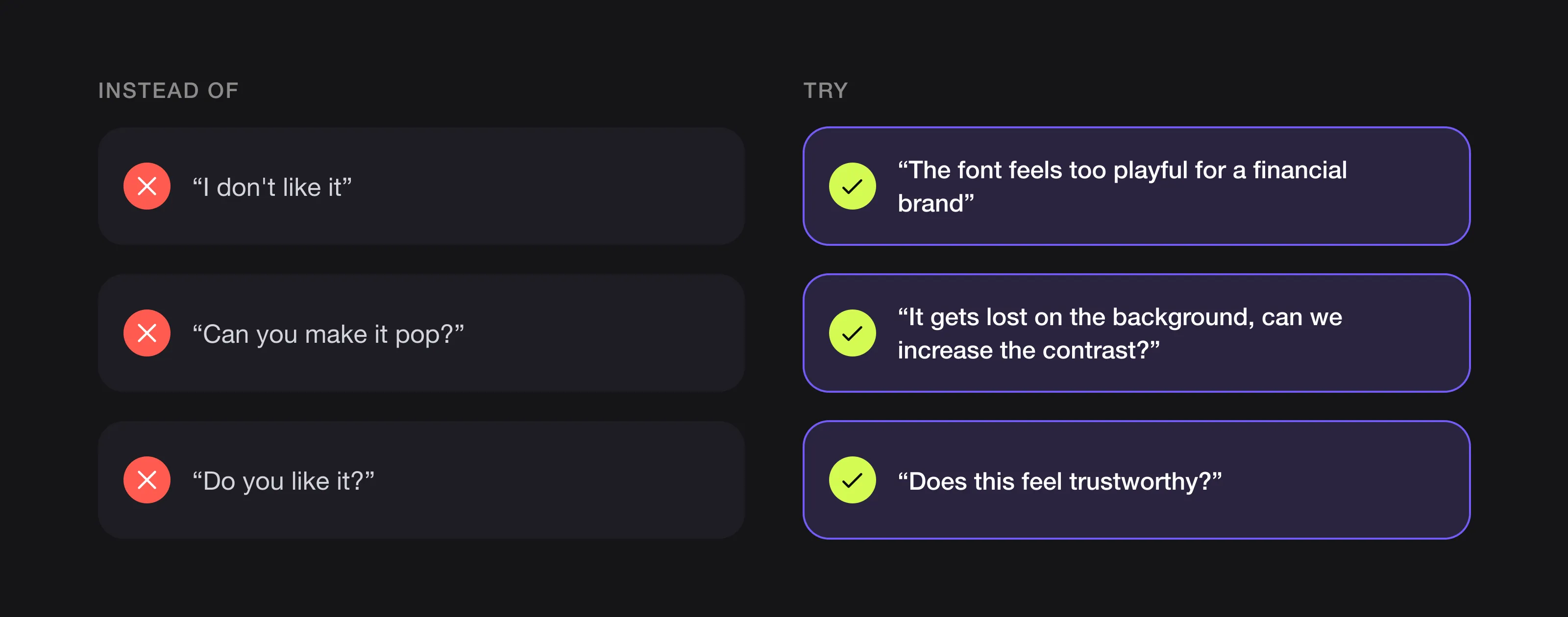 Swap vague reactions for specific, useful feedback.
The Keep / Change / Explore framework
When a concept arrives and you want changes, structure your message like this:
Keep: everything that should stay. “Keep the icon style, the layout and the colour palette.”
Change: specific changes, with the reason. “Change the font to something more modern: the current serif feels too traditional for a tech startup.”
Explore: directions you’d like the designer to try. “Could you try the icon above the name instead of beside it? A stacked version might work better on our social profiles.”
The designer now knows what to protect, what to change and where they have creative freedom. That means faster revisions, fewer rounds and a logo that matches what you had in mind.
Five tests to judge a logo objectively
Before you reply, put the concept through these tests:
- The squint test. Squint until the logo blurs. Can you still make out its shape? Then it has a strong structure.
- The thumbnail test. Shrink it to profile-picture size (about 40 × 40 pixels). Is it still recognisable? If not, it needs simplifying.
- The black-and-white test. Remove the colour. If the logo only works in colour, the underlying shape is weak.
- The memory test. Look at it for five seconds, then look away. Can you describe it? Memorable logos have one strong idea, not five competing ones.
- The context test. Picture it on your website, a business card, a social post and a T-shirt. Does it work in all four?
These tests also catch the most common amateur logo mistakes before they reach your customers.
FAQ
How do I tell a designer I don’t like their logo?
Say what isn’t working and why, rather than “I don’t like it”. “The font feels too playful for a financial brand” gives the designer something to fix, and naming what you do like stops them changing that too.
What should I say instead of “make it pop”?
Describe the actual problem, because “pop” means something different to everyone. For example: “The logo feels flat, could we try bolder colours?” or “It gets lost on the background, can we increase the contrast?”
Should I ask friends and family what they think of my logo?
You can, but ask specific questions such as “Does this feel trustworthy?” or “Would you buy from this company?” “Do you like it?” mostly gets you personal taste, not useful feedback.
How can I tell if a logo concept is good?
Run it through five quick tests: squint at it, shrink it to about 40 × 40 pixels, remove the colour, see if you can describe it after five seconds, and picture it on your website, a business card, a social post and a T-shirt.
Start with a clear brief
The best feedback starts before the project does, with a clear brief (use our logo design brief template). The more your designer knows about your brand, audience, competitors and tastes upfront, the closer the first concept will be.
At Logomint, every project starts with a short interactive questionnaire that captures exactly this. Your project manager then assigns the senior designer whose style fits your brand best, so revisions are about refining, not starting over. Growth and Premium plans include unlimited revisions until it’s right.
Good feedback turns a good logo into a great one: be specific, explain why, and trust your designer with the how. Still choosing who to work with? Compare your options in freelance designer vs. logo design service.