Short answer If strangers will see your brand (customers, investors, future hires), yes. A placeholder is only fine while you’re testing with people who already know you. The moment you go to market, a DIY logo starts costing you trust, conversions and, later, a rebrand.
The “just ship it” debate
Spend ten minutes in any startup community and you’ll see the question: “Should I get a real logo before launching, or just use something from Canva?”
The answers split into two camps. One says nobody cares about your logo at the MVP stage. The other says you only get one first impression. Both are partly right, and the difference comes down to who is looking.
When a placeholder logo is fine
A placeholder is perfectly fine if you are:
- building an internal tool
- testing a concept with 10 beta users you know personally
- running a weekend project with no commercial goal
Nobody outside your circle sees the brand, so nobody judges it.
The catch: most founders who say “I’ll get a real logo later” aren’t in this situation. They’re publishing a landing page, posting on social media, sending cold emails and pitching investors. That isn’t testing anymore. That’s going to market.
Where a DIY logo costs you
Investor meetings. Investors see hundreds of decks. A polished brand signals that you’re serious and pay attention to detail. A template logo makes them wonder where else you cut corners.
Landing page conversions. Your logo is one of the first things a visitor sees, and people judge a page’s visual appeal within 50 milliseconds. If it looks amateur, people leave before they read your value proposition, however good your product is: visitors often leave a page within 10 to 20 seconds.
Customer trust. Would you type your card number into a site whose logo looks like it took five minutes? Your customers won’t either: Stanford’s web credibility research found that people quickly judge a site’s credibility by its visual design alone. For e-commerce especially, looking professional and converting go hand in hand.
Hiring. Early employees and contractors look you up. If the brand looks like a side project, the best candidates move on.
The real cost of “I’ll do it later”
Founders who skip branding at launch usually end up paying more. The pattern looks like this:
- Launch with a free template logo.
- Build the website, social profiles, pitch deck and business cards around it.
- Realise after 3 to 6 months that the logo is hurting credibility.
- Pay for a professional logo anyway.
- Spend 10 to 20 hours replacing it everywhere: website, social headers, email signatures, decks, packaging.
The logo itself costs €129 to €299 (here’s how much to budget at each stage). The hours spent swapping it out, and the momentum you lose while doing it, cost far more.
The smart approach: a professional logo on day one
The founders who get this right treat their logo like their domain name: launch infrastructure, not a nice-to-have.
And it no longer takes a €5,000 agency project or weeks of back-and-forth. At Logomint, a senior designer creates a custom logo from €129, with your first concepts in 48 hours, the final files within 7 days, and a 100% money-back guarantee. You get vector, print and editable source files, so you can launch looking like an established brand.
Your minimum viable brand
Before launch you need three things, not a 50-page brand book:
- A professional logo. Custom, not a template, and delivered as vector files so it works from a browser tab to a billboard. (Not sure which files you need? Here’s the logo file format checklist.)
- A colour palette. Two or three colours that work together and fit your brand’s personality.
- Consistent typography. One or two fonts, used everywhere.
That’s enough to look credible from the first day.
Launching a software product? Our guide to logo design for tech startups covers what your logo needs to do as an app icon and a favicon.
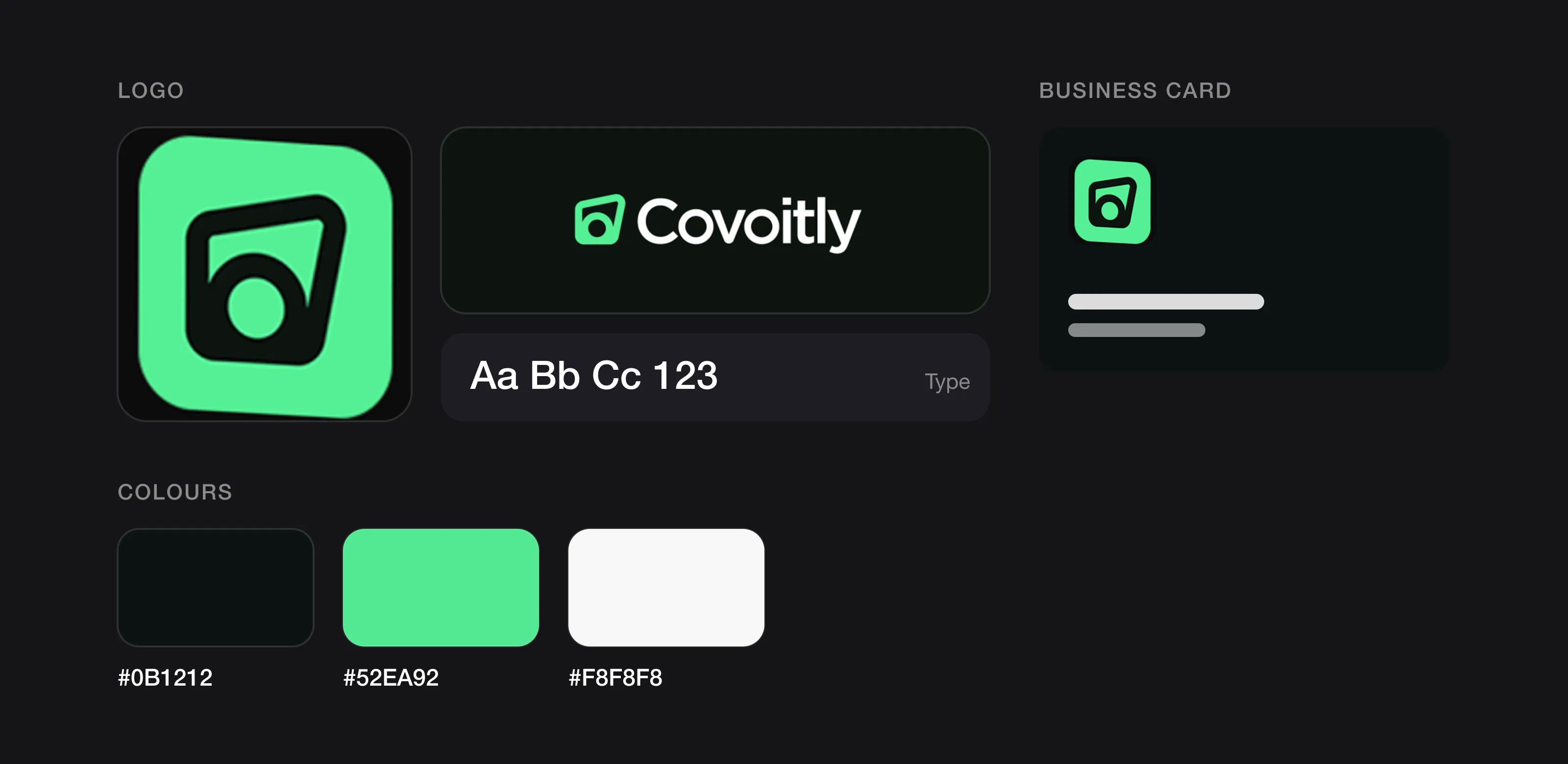 A minimum viable brand: logo, two or three colours and one or two fonts (Covoitly, designed by Logomint).
FAQ
Can I launch my startup with a Canva logo?
Only while you’re testing with people who already know you, such as an internal tool, 10 beta users you know personally or a weekend project with no commercial goal. Once you publish a landing page, post on social media, send cold emails or pitch investors, you’re going to market, and a DIY logo starts costing you trust and conversions.
Does a logo affect landing page conversions?
Yes. People judge a page’s visual appeal within 50 milliseconds, and if your logo looks amateur, visitors can leave before they read your value proposition.
How much does it cost to replace a logo after launch?
The professional logo itself costs €129 to €299, but founders typically spend 10 to 20 hours replacing it everywhere: website, social headers, email signatures, decks and packaging. Those hours, and the momentum you lose, cost far more than the logo.
What branding do I need before launching a startup?
Three things, not a 50-page brand book: a professional custom logo delivered as vector files, a palette of two or three colours, and one or two fonts used everywhere.
The bottom line
If real people will see your brand, you need a real logo. Looking amateur costs you deals, conversions and eventually a rebrand that’s more expensive than doing it right the first time.
A custom Logomint logo starts at €129, your first concepts arrive in 48 hours, and if you don’t love them you get your money back. See the plans.